
Link para ver maior em outra aba: O ESCRITOR E SEU CHAPEU – SOBRE AT – VANUSIA AMORIM – PPGLL -LETRAS UFAL por Vanusia Amorim
O-ESCRITOR-E-SEU-CHAPEU-SOBRE-AT-VANUSIA-AMORIM-PPGLL-LETRAS-UFALHomenagem aos 80 anos de Antônio Torres – Academia Brasileira de Letras
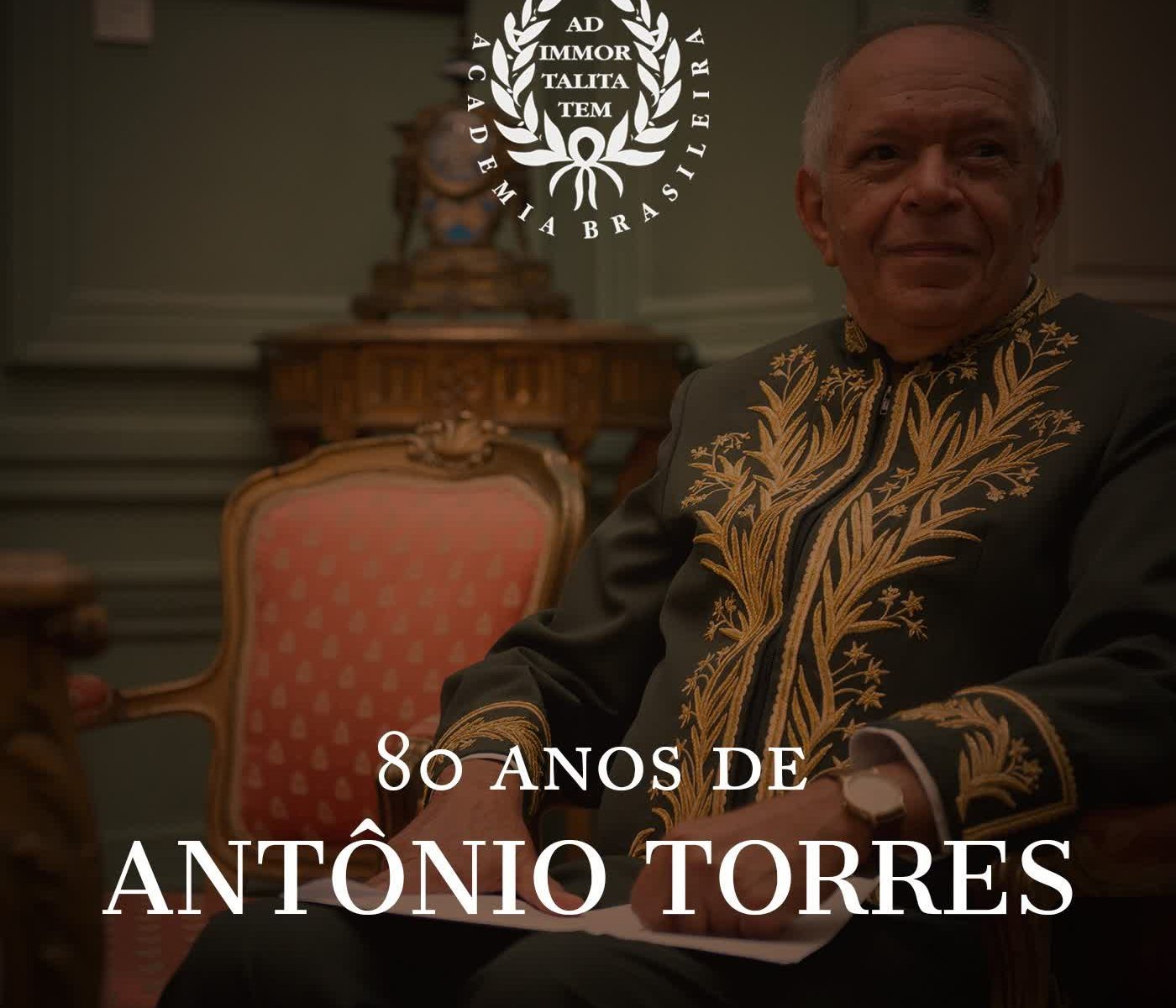
A Academia Brasileira de Letras apresenta a homenagem aos 80 anos de Antônio Torres (clicar no link leva ao site original):
Meu Querido Canibal: resenha de Antônio Saracura
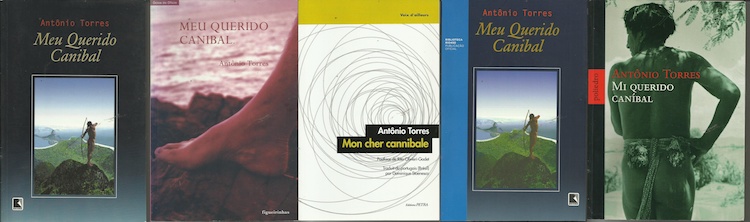
Veja o artigo original no blog Sobre Livros Lidos, de Antônio Saracura: MEU QUERIDO CANIBAL, Antônio Torres.
Abaixo está a versão em PDF, que você pode ver ampliada clicando aqui: Resenha de Meu Querido Canibal, por Antônio Saracura
Antonio_Saracura_sobre_livros_lidos_MEU_QUERIDO_CANIBAL_Antônio_TorresAcclaim for Blues for A Lost Childhood
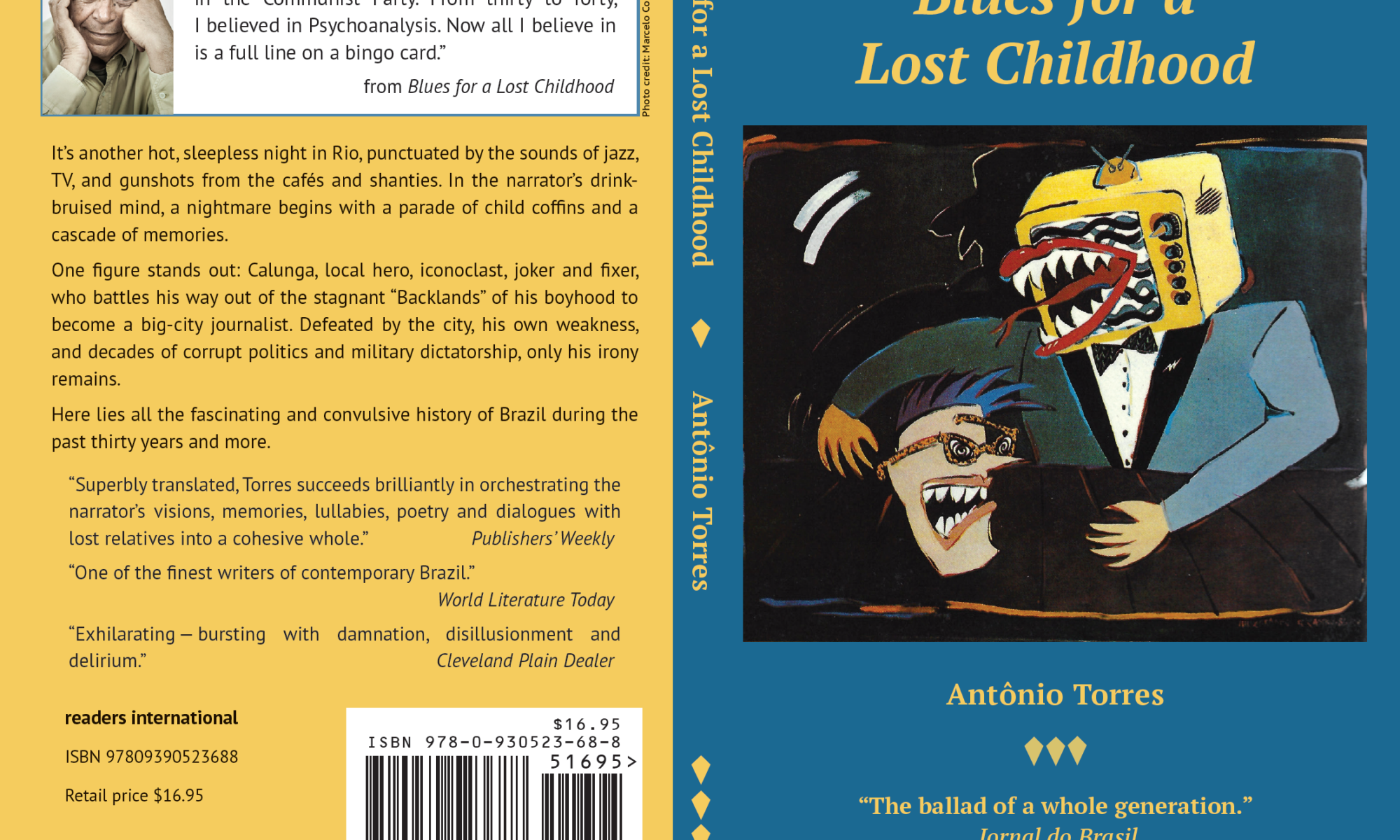
“A novel that must be read, an intellectually demanding political, social and literary creation, a novel of psychological depth, remarkable imagery and tragic, absurd beauty. Torres’ novel is a challenge; nonetheless it offers a wonderful opportunity to learn about a people, about a culture that knows so much more about us than we know about them.”
Los Angeles Times
“Torres’ book mixes places and times, so that the narrator alternates between talking to the dead, quarreling with his wife, and dreaming of his mother. The style is musical and moralistic, spattered with tags of songs, proverbs . . . , and reminders that ‘to remember is to live’.
The New Statesman
“The flight to Rio de Janeiro and São Paulo symbolizes an important drama for Brazilians. To abandon drought, poverty, and repressive tradition for the hope that the adopted cities represent is to act a role in a contemporary play whose protagonists are a continuous stream of refugees. The deep cleft that separates the two parts of the country is much harder to cross than anyone imagines . . . Torres’ books, widely read in Brazil, reveal a compelling need to define the relationships between individuals and institutions and to understand the critical metaphorical and actual journeys they make. Brazil is a country of frontiers, its sophisticated modernity juxtaposed with vast wilderness and daunting challenges, a country truly on the cusp.”
Hungry Mind Review
“The topic of craziness was a crucial one in the 1970s, not only because of individual life experiences but also because of the repression and censorship enforced by the military dictatorship, which lead many young intellectuals into political exile or psychiatric treatment. Blues for a Lost Childhood (1986) picks up earlier themes. The protagonist’s hallucination brings up Brazil’s political past, this time from a Spanish-American perspective.”
Dictionary of Brazilian Literature
“By the time we join Calunga and his cousin in Blues for a Lost Childhood, the world has inexorably started turning. The dizziness is that of the military dictatorship and its Economic Miracle, a ‘Nobel Prize afternoon’ of ‘traffic jams, tunnels, overpasses, sirens, barracks, tortured and torturers, and the dog-shit on the sidewalks.’ The childhood language of prayer and ritual, lullabies, romantic poetry memorized at school, rural ballads reciting murder and myth, remains as both a haunting and comforting reminder of another universe, populated too by the precessions of blue ‘angels’—coffins, the tragedy of infant mortality. But it is rapidly submerging beneath a new language, that of journalism and advertising, television and popular song, state propaganda and revolutionary protest, where any perspective of depth and truth has disappeared . . . In the limbo between these two cultures, where there is no longer any centre to hold, and where there is no possible return, then perhaps suicide, alcoholism or madness are understandable options.”
Babel Guide to Fiction from Portugal, Brazil & Africa
in Translation
“Morning StarTorres develops a syncopated, stop-start style, effervescent, raked with satire and insight into ‘the outrageous things that are going on around us’ . . . Remarkable.”
Morning Star
Acclaim for The Land
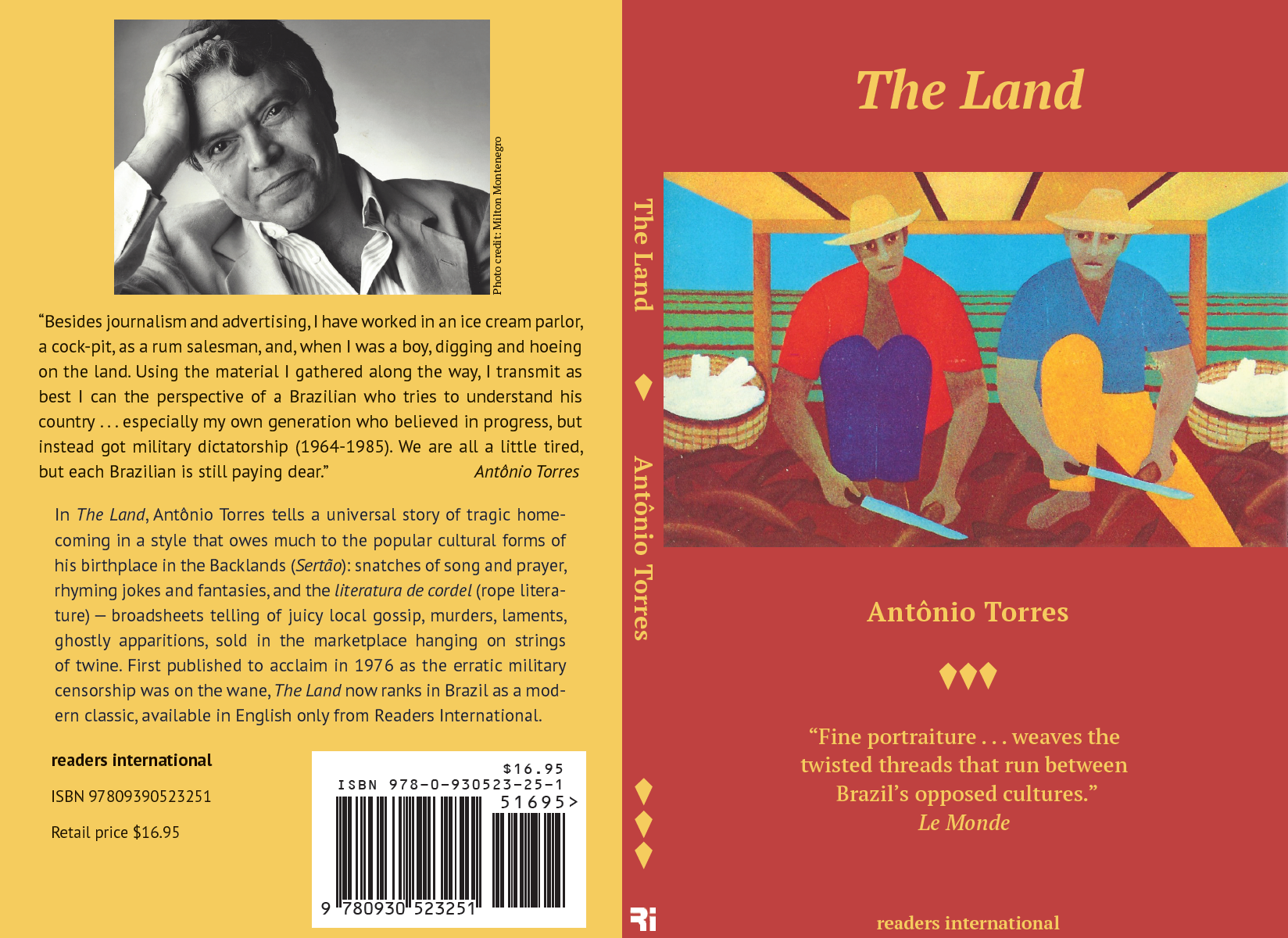
Repercussão em diversos jornais:
Acclaim for The Land
“An almost classic account of the notoriously poor area of its author’s birth.” – London’s Financial Times
“Tears at you like an early Buñuel movie.” – The Observer
“Vivid, moving, explosive . . .” – San Francisco Examiner
“Full of the unanswered quesJons of a third world country in transiJon.” – Publishers’ Weekly
“I very much admire the irony, the warmth and style of The Land, which so brilliantly describes poor people in a village whose life is leaving it.” – Doris Lessing
“UpliPed by Torres’ melodic prose and inJmate knowledge of rural Brazil . . .” – Kirkus Reviews
“The Land is wriTen in a spare, austere, inward-looking style which mirrors the harshness of the Sertão and plunges the reader into the hopelessness, sense of loss, random violence and fragmentaJon the people suffer. . . . At a meeJng with the author in Santo André, the most industrial zone of São Paulo, one thousand naJve baianos turned up: “We feel we are the characters in your books. . . .” – Guardian
“Part of the growing awareness of the importance of LaJn American wriJng, and especially the rich cultural heritage of Brazil with its mix of African, Amerindian and European tradiJons.” – Third World Quarterly
“Nelo’s story becomes an emblem . . . of the transiJon these people must make to an inhospitable, urbanised twenJeth century where only the very old retain the centuries-long love of the land itself, now largely owned by the banks . . . An elegant, finely structured work.” – The Scotsman
“In a style cut back to the essenJals, drawing on the folklore and culture of Brazil’s impoverished ‘backlands’ and uJlizing fragments of songs, jokes, prayers, and popular tales, Torres shows us a community in which those who can leave do so, and those who remain dream of making it to the city, São Paulo, where there are ‘30 leagues of paved streets’ . . . The Land speaks in the language of exile and biTer homecoming and it repays careful reading.’” – Tribune
Estudo sobre Meu querido canibal produzido na Universidade de Rennes
Clique para ver maior em uma nova aba:
Pluralisation de l’espace amérindien Mon cher Cannibale – Antônio TORRES – Rédigé par Agathe BRIAND
Dossier_BRIAND_Litterature_Bresil_M2_Les_AmeriquesCiclo das Artes – YouTube
Descrição no canal:
Neste episódio o entrevistado é o escritor Antônio Torres.
O Ciclo de Literatura é uma série de entrevistas com profissionais da Literatura na qual o entrevistado fala como público diante da arte, como artista diante da arte, e, por fim, como artista diante do público, fechando um ciclo.
Ciclo das Artes
⠀ ⠀ ⠀⠀⠀⠀⠀
Os programas inéditos integram o projeto Ciclo das Artes, criado e produzido pela Produtora Domínio Público com direção de Caio Rubens, produção executiva e roteiro de Reinofy Duarte e direção de arte e cenografia de Suzana Rezende.
⠀ ⠀ ⠀⠀⠀⠀⠀
As entrevistas foram gravadas durante a Festa Literária Internacional de Cachoeira. É a TV pública da Bahia aproximando a arte e o público.
⠀ ⠀ ⠀⠀⠀⠀⠀
Assista toda terça, às 20h, na TVE e no Portal.
Live no Institut Franco-Brésilien alter’brasilis
Membro da Academia Brasileira de Letras, detentor de vários prêmios literários, Antônio Torres tem 19 livros publicados, com repetidas edições e traduções em vários idiomas em mais de vinte países do mundo. Na França, tem cinco livros traduzidos: “Le corsaire de Rio”, “Cette terre”, “Un taxi pour Vienne d’Autriche”, “Chien et loup”, “Mon cher canibale” além do conto “Selon Nego de Roseno” na antologia “Contes de Noël Brésiliens”. Foi condecorado como Chevalier des Arts et des Lettres pelo governo francês em 1998. Para festejar seus 80 anos lança este ano” Querida Cidade”
Da publicação no Facebook do Institut Franco-Brésilien alter’brasilis
Antônio Torres Conversa sobre “Essa Terra” – Universidade da Gente
Do canal:
“O escritor e imortal da Acadêmica Brasileira de Letras Antônio Torres falará conosco sobre seu romance “Essa Terra” e outras obras . “Essa Terra” compõe a lista do vestibular da UNEB.”
PPGEL UNEMAT Live Literária #1 – com os escritores Eduardo Mahon, Ricardo Lísias e Antônio Torres
Da descrição do vídeo:
Tema: “A Literatura Brasileira e a condição do Escritor no Brasil de hoje” – O CIRCUITO DE LIVES LITERÁRIAS é uma realização da Universidade do Estado de Mato Grosso (UNEMAT) e Universidade de São Paulo (USP) através dos Programas de Pós-graduação PPGEL-UNEMAT e ECLLP-USP
Canal PPGEL UNEMAT
Transmissão patrocinada pela Seeg Fibras.